
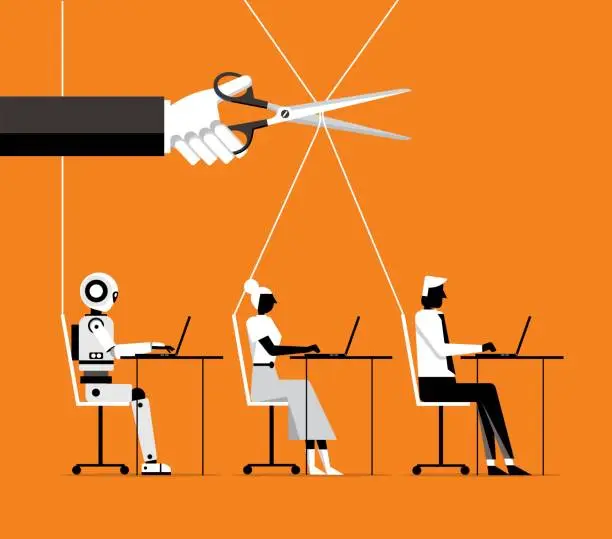
If you’re a CX, Support, or Success leader right now, your feed probably looks something like this:
- “Salesforce replaces 4,000 support jobs with AI agents.”
- “Microsoft saves $500M in call centers with AI.”
It’s easy to feel like the message is:
“If you’re not firing large chunks of your support org, you’re doing AI wrong.”
Reality is a lot messier, and a lot more useful for you.
This post is about how to read those headlines without copying the wrong playbook.
1. What Actually Happened at Salesforce and Microsoft
Let’s ground this in what’s actually been reported.
Salesforce: 4,000 support jobs cut, AI agents take a big share
Recent coverage of Marc Benioff’s comments paints this picture:
- Salesforce has cut roughly 4,000 customer service roles as part of a broader restructuring.
- Benioff has said AI agents now handle around half of customer service interactions, with humans handling the rest, he’s also touted internal figures like 93% AI agent accuracy in some contexts.
Key nuance:
- Even at Salesforce, the story is “AI does a big chunk, humans do the rest.”
- They still have large human CX and support teams, especially for complex, high-value accounts.
Microsoft: $500M saved in call centers with AI
Microsoft execs have publicly said:
- The company saved around $500 million in call center costs in 2024 by rolling out AI in its contact centers.
- Those savings came alongside broader layoffs, roughly 6,000 employees, or ~4% of the workforce, were cut across the company.
Again, the nuance:
- AI is being used heavily for smaller client interactions and routine queries.
- Humans still handle larger, more complex relationships and escalations.
These are real, massive shifts. But they come with three huge caveats.
2. Caveat #1: These Are Mega-Scale, AI-Native Vendors
Salesforce and Microsoft are not “normal” companies:
- They build and sell AI and CX platforms.
- They operate at global scale, with:
- Huge user bases
- Massive, high-quality data sets
- Very mature digital and cloud infrastructure
- They can:
- Invest heavily in AI engineering and safety
- Tune models on billions of interactions
- Absorb more risk and noise than a typical SMB or mid-market firm
If you’re a 50, 500, or even 5,000-person company:
- You don’t have their data gravity.
- You don’t have their R&D budget.
- You don’t have their margin structure to cushion mistakes.
Trying to copy their headcount decisions without their infrastructure and risk tolerance is playing on hard mode with someone else’s character.
3. Caveat #2: Even They Frame AI as “Let Humans Focus on the Hard Stuff.”
Notice how these big players pitch their own AI:
- Salesforce’s messaging emphasizes AI agents handling a large share of interactions so humans can focus on complex issues, not “no more humans at all.”
- Microsoft’s execs talk about AI handling low-level, high-volume work and “smaller clients,” while humans are still key to higher-value work.
And when Benioff is talking about sales (a different function, but same philosophy), he’s explicit:
- AI will not replace salespeople; Salesforce is still hiring thousands of reps because a human connection is essential in how they sell.
The underlying pattern in their own words:
- AI agents:
- High volume
- Lower complexity
- Mid-tier customers
- Humans:
- Exceptions
- High-stakes customers
- Strategic, emotional, or complex issues
They’re not saying, “We don’t need CX anymore.”
They’re saying, “We redesigned CX so AI and humans each do what they’re best at.”
4. Caveat #3: Independent Research Says Customers Still Want Humans
Now stack those stories against what independent research is saying.
A few big data points:
- Gartner (2024):
- 64% of customers would prefer companies not to use AI for customer service.
- 53% would consider switching to a competitor if they found out a company was going to use AI for service.
- Top concerns: difficulty reaching an agent and AI displacing jobs.
- Qualtrics (2024):
- “Human connection is the foundation of a winning AI strategy.”
- Customers are already frustrated with digital support and worried about losing human contact, especially when something goes wrong.
- CX Today/Verint (2025):
- 61% of CX professionals say governments should mandate a right to speak to a human in customer service.
- Qualtrics (2025 CX Trends):
- AI-powered customer service fails at almost 4× the rate of other AI tasks; nearly 1 in 5 people who used AI for service saw no benefit.
- TechRadar’s “Trust Recession” (2025):
- 91% of users experienced a frustrating digital interaction in the past year.
- 70% say they’d switch brands after a single poor AI service experience.
The reality:
Customers:
- Still prefer humans overall
- Want easy escalation to a human
- Punish brands that use AI as a cost-saving wall between them and people
So even if the mega-vendors can push harder on pure automation without losing the farm, most companies can’t.
5. What This Really Means for You
The message for your business is not:
- “Ignore Salesforce and Microsoft.”
It’s:
Unless you are a Salesforce/Microsoft-scale, AI-vendor platform, you probably can’t get away with gutting CX.
But you can borrow parts of their playbook, and apply them in a way that becomes your moat.
Practically, that looks like:
Learn from them on where AI helps
- Use AI to:
- Handle repetitive tickets and simple flows
- Do smarter triage and routing
- Auto-summarize and suggest responses
- Feed your agents and CSMs better context and “next best actions”
Don’t copy them on who you keep
- Protect and amplify the people who:
- De-escalate angry customers
- Hold key relationships
- Understand your product and edge cases deeply
- Carry your brand voice in critical moments
Make CX the architect, not the collateral damage
- Put CX/Support/Success in charge of:
- Which journeys get AI
- Where escalation happens
- How success is measured (resolution + CSAT + NRR, not just deflection)
- Use AI to:
- Compress low-value work
- Extend great CX to more customers
- Give your humans superpowers, not pink slips
That’s where you can overperform while others chase cost savings only.
6. Quick Self-Check: Are You Chasing Their Headlines or Building Your Moat?
Ask yourself:
- Why are we doing AI in CX?
- To improve resolution, satisfaction, and NRR.
- To “reduce headcount by X%.”
- Who designs our AI service flows?
- CX/Support/Success leaders with clear outcome KPIs.
- Mostly IT/vendors, with CX brought in late.
- What happens when AI fails?
- Customers can easily reach a human with full context.
- They hit a wall or have to start over.
- Are we small/mid-market pretending we’re Salesforce?
- Our CX is a core differentiator; we treat people as a moat.
- We’re replicating Big Tech layoff headlines without Big Tech buffers.
If you’re mostly in the second column, you’re not “doing what Salesforce did.”
You’re running a riskier version in a smaller, more fragile environment.
Where The Scale Crew Fits In
This is exactly the nuance we help our clients navigate.
With our expanded capabilities across:
- Customer Experience & Ops
- Customer Support & Success leadership
- AI Readiness & Transformation
…we work with startups, SMBs, and mid-market firms who:
- Don’t want to be stuck in AI theater
- Don’t want to fire their moat (the people who actually keep customers)
- Do want to use AI to build an experience advantage their competitors can’t easily copy
We help you:
- Decide where to use AI agents, and where not to
- Design escalation paths and human roles that build trust instead of eroding it
- Tie AI + CX decisions directly to NRR, churn, and LTV, not just cost
We’re not here to give you a “4,000 agents fired” headline.
We’re here to help you become the company that:
- Uses AI under the hood
- Shows up more human than ever at the moments that matter
- Turns CX and CS into a defensible, AI-augmented moat, while others chase savings and train their customers to leave
If You’re Feeling the Pressure to “Do What Salesforce Did”
We’ll help you see:
- What parts of the big-vendor playbook are actually safe to copy
- Where automation will genuinely help vs where it will backfire
- How to design AI-augmented CX that fits your scale, and makes you harder to replace, not easier.