AI isn’t just another tool rollout.
It’s a full-on workforce shock:
- The World Economic Forum’s Future of Jobs 2023 estimates 44% of workers’ core skills will change by 2027, and 6 in 10 workers will need retraining, yet only about half are seen as having adequate training opportunities today.
- Microsoft’s 2024 Work Trend Index finds 75% of global knowledge workers already use AI at work, often as “bring your own AI.” Still, only 39% say they’ve had AI training from their employer, and only ~25% of companies plan to offer generative AI training this year.
So:
- Skills are being rewritten.
- Employees are already using AI, mostly unguided.
- Training, norms, and guardrails are missing.
That’s not a technology problem.
That’s a people, skills, and culture problem.
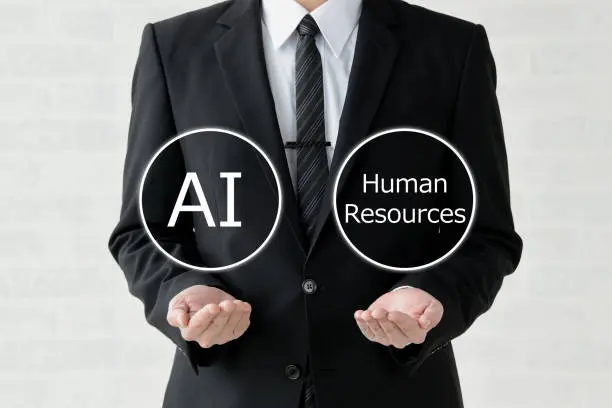
Which means it’s an HR problem.
And in this moment, HR has two possible futures:
- Orchestrator of workforce adaptation, or
- Bystander/bottleneck while tech and line leaders improvise around people.
This post is about why HR is vital in the age of AI, and how Scale Crew HR + our AI Readiness & Power User work help our clients land on the right side of that choice.
1. The Workforce Shock: AI Is Moving Faster Than Your Org
Zoom out on the macro picture:
AI is reshaping skills at scale
WEF’s Future of Jobs 2023 gives us a blunt forecast:
- 44% of workers’ core skills will be disrupted by 2027.
- 6 in 10 workers will require training before 2027.
- Only about half of workers are seen as having adequate access to training today.
In parallel, the 2025 update shows employers still expect nearly 40% of skills to change by 2030, confirming that this isn’t a blip, it’s a sustained high level of disruption.
AI adoption is outrunning org readiness
Microsoft + LinkedIn’s 2024 Work Trend Index paints the workplace side of the same story:
- 75% of knowledge workers are already using AI at work.
- 78% of those users are bringing their own AI tools (BYOAI), often outside formal policy.
- Only 39% of AI users have received any company-provided AI training.
- Only ~25% of companies plan to offer generative AI training this year.
In other words:
- Employees are already living in the AI future.
- Companies are still running 2010-era training and governance.
Someone has to:
- Make sense of what this means for roles, skills, career paths, and job security.
- Design and scale retraining, mobility, and AI literacy.
- Set norms and guardrails so AI use is safe, fair, and actually helpful.
That “someone” is HR, or no one.
2. Why HR Becomes Mission-Critical in an AI-Driven Business
In an AI-heavy business, HR isn’t just running payroll and benefits.
HR becomes:
- Skills strategist
- Job and org designer
- Culture & trust owner
- AI workforce governance partner
1) HR as skills strategist
When 40-44% of skills are changing within five years, you can’t just “hire for it.”
HR is the only function tasked with:
- Building a skills map of the org:
- What’s becoming obsolete
- What’s emerging (AI literacy, data, judgment, customer empathy)
- Designing reskilling & upskilling programs that:
- Aren’t just generic “AI 101”
- Are grounded in real roles and career paths
- Partnering with finance and ops to answer:
- Where do we retrain?
- Where do we restructure?
- Where do we hire?
Without HR doing this intentionally, you get random pockets of AI capability and a lot of talent churn.
2) HR as job and org designer for augmented work
AI won’t just “automate tasks.” It will reshuffle what humans do:
- What gets automated
- What gets augmented
- What becomes more human (judgment, coaching, relationship work)
Recent academic work on AI & HR is explicit: HR must move from being a transactional process owner to an architect of human-machine collaboration, redesigning roles, workflows, and performance expectations so that AI and people actually fit together.
That looks like:
- Rewriting job descriptions and expectations for AI-augmented roles.
- Adjusting team structures when AI takes a chunk of the work.
- Making sure “time saved” doesn’t just become “more tickets” but higher-value work.
If HR doesn’t do this, AI becomes:
- A bolt-on tool that adds noise
- Or a quiet source of fear and resentment
3) HR as culture, trust, and psychological safety owner
Microsoft’s research shows a weird contradiction:
- Leaders say they want AI skills (66% wouldn’t hire someone without them).
- Yet more than half of AI users say they hide using AI for their most important work, and worry it makes them look replaceable.
That’s a trust and messaging failure.
HR is the only function explicitly responsible for:
- Employee experience
- Psychological safety
- Communication about jobs, careers, and change
In an AI-heavy world, that means:
- Designing an AI @ Work compact:
- Where AI will be used
- How it affects roles
- What “time dividends” look like
- How AI-related mistakes will be handled
- Coaching leaders and managers on how to talk about AI:
- Not “Use AI but don’t screw up”
- But “Here’s what we’re doing, why, and what it means for you.”
If HR doesn’t lead that narrative, employees fill the silence with fear.
4) HR as AI workforce governance partner
IT, security, and legal can write policies.
They can’t own how it feels to use AI at work.
HR is needed to:
- Co-create AI policies that are:
- Understandable in plain language
- Liveable in daily workflows
- Ensure AI in hiring, performance, and internal mobility is:
- As fair and explainable as possible
- Audited for bias and unintended consequences
- Provide a channel for employee voice:
- Where people can raise issues with AI decisions
- And see those issues actually drive change
If HR sits out, AI workforce governance becomes a technical exercise, and you end up with policies no one trusts or follows.
3. Two Futures for HR in the Age of AI
Given all this, HR has a fork in the road.
Future A: HR as orchestrator of workforce adaptation
Signs you’re on this path:
- HR is in the room when AI strategy is discussed, and not just for “impacts later.”
- You have a skills and reskilling plan, not just a hiring wish list.
- There is a clear AI @ Work compact leaders can repeat.
- HR is driving AI literacy, manager training, and power-user cultivation.
- People know where AI is allowed, where it’s not, and how it affects their career.
Here, HR is the operating system for how humans and AI work together.
Future B: HR as bottleneck/bystander
Signs you’re drifting here:
- AI decisions are made by tech and line leaders; HR hears about them later.
- “AI strategy” is mostly tool choices and vendor decks.
- Training is ad hoc, or employees are teaching themselves in the shadows.
- HR is asked to “help with change communications” after decisions are locked.
- Employees are using AI aggressively, but no one is watching skills, fairness, or burnout.
Here, HR is constantly trying to catch up with changes it didn’t help design.
4. What High-Impact HR Does Differently with AI
The research gives us a pretty clear picture of what “good” looks like.
1) They treat AI as a skills & behavior program, not an IT project
- Use WEF-level data (44% skills disrupted; 6 in 10 need training) as a planning input, not trivia.
- Build a living skills map tied to AI:
- Which roles are most exposed to automation
- Which roles can be supercharged with AI
- Which new skill clusters you’ll need in 12–24 months
- Design reskilling and internal mobility as core levers, not a side-of-desk effort.
2) They deliberately create AI power users, not just “let people play”
Microsoft’s Work Trend Index identifies AI power users, people who:
- Use AI frequently
- Save 30+ minutes per day
- Are 66% more likely to redesign business processes and workflows with AI, not just tasks
- Report higher productivity, creativity, and motivation
These power users don’t appear randomly. The research shows they’re far more likely to:
- Hear clear messages from senior leadership about using AI
- Work in cultures that encourage experimentation
- Receive targeted training for their role and use cases
High-impact HR teams:
- Make “AI power user” a design goal, especially in:
- Customer support
- Sales & CS
- Ops/back office
- Build manager-first enablement so the people who set expectations are equipped first.
- Track and share power-user patterns so the whole org benefits.
3) They put HR at the center of AI training and norms
Given that only 39% of AI users globally have received training, and only ~25% of companies plan to offer genAI training this year, there’s an obvious gap.
High-impact HR:
- Owns an AI learning roadmap:
- Baseline literacy for everyone
- Role-specific training for key functions
- Deep-dive tracks for “AI champions” and power users
- Works with IT/security to create AI usage norms that:
- Are written in human language
- Explain why guardrails exist, not just what’s forbidden
- Are reinforced in onboarding, performance, and leadership communications
4) They measure adoption, impact, risk, and trust, not just licenses
Instead of asking “How many AI seats did we buy?” high-impact HR partners with ops and data teams to build a simple Adoption Scoreboard:
- Usage – who’s eligible vs who’s active; how often; in which workflows
- Impact – what’s happening to the KPIs that matter (CSAT, handle time, NRR, cycle time, quality)
- Risk – policy violations, data exposure, error rates, overrides
- Trust – survey pulses on clarity, fairness, and psychological safety
That’s how you decide:
- Where to double down
- Where to refine workflows or guardrails
- Where to stop and re-think
And HR is the only function with the mandate and skillset to hold all four lenses at once.
Where The Scale Crew Fits In
This is the intersection The Scale Crew was built for.
We’re not just “AI people” bolted onto a traditional HR shop, or vice versa.
We bring together:
- Scale Crew HR – fractional HR leadership and deep practitioner experience:
- Org design
- Employee relations
- Change management
- Talent, performance, and culture
- AI Readiness & Transformation – a gated program to:
- Decide if and where AI belongs in your business at all
- Align leaders and managers around an AI @ Work compact
- Design people-first adoption and AI power user strategies
- Make sure your data, workflows, and guardrails can actually support what you’re trying to do
For our US startups, SMBs, and mid-market firms who are:
- Past the AI-theater phase
- Tired of pilots that never hit production
- Nervous about the talent and culture side of AI
…we don’t show up as a shield between you and your people.
We show up as:
- The HR + AI partner who will:
- Challenge leadership to get specific about jobs, skills, and trust
- Help HR move from “supporting project X” to orchestrating workforce adaptation
- Design AI power user pathways instead of hoping a few self-taught heroes emerge
We’ll help you:
- Figure out whether you even need a custom AI-powered app, or whether existing tools plus better workflows and training will get you 80% of the value.
- Make sure that if you do invest in AI, HR isn’t stuck cleaning up the mess later, it’s leading the design from day one.
If You Want HR to Be the Orchestrator, and Not the Bottleneck
If you’re looking at your org and thinking:
“We know AI is coming. We’re not sure our people side is ready.”
We’ll help you see:
- Whether AI actually belongs in that conversation right now
- Whether HR is set up to be the orchestrator of workforce adaptation, or at risk of becoming the bottleneck
- Where AI readiness, HR practices, and power-user design need to evolve so your people can move with AI, not get run over by it
Because AI is absolutely going to rewrite how work gets done.
The real question is whether HR is the one holding the pen.